

Table of Contents
The Wednesday HOT TAKE
June 30 Report Recap & A Few Final Thoughts
Well, that was relatively uneventful.
Today’s report did two jobs at once: it checked old-crop demand with one quarter left in 2025/26 and gave the market its first real acreage update — a number we will trade through the rest of the U.S. growing season.
To sum it up: corn stocks were higher than last year, but lower than expected, leaving one burning question in my mind — was last year’s crop really as big as USDA said?
On the acreage side, corn and soybeans were mostly a nonevent and wheat was undoubetedly the surprise.
Let’s Talk Stocks
Corn
June 1 corn stocks came in at 5.295 billion bushels, up 652 million from last year, but 113 million below the average trade guess.

Source: USDA
The year-over-year increase was expected — duh, we grew a 17 billion bushel crop — but today’s miss is hard to ignore with implied Q3 feed/residual use running off the charts relative to livestock numbers.
But wait, there’s more.

Put it together, and it is getting harder to NOT call USDA’s record 186.5 bpa final yield into question.
The kicker is USDA does not adjust yield in a meaningful way after January, which means if the crop was too big on paper, feed/residual is the ONLY lever NASS has to pull.
On-farm stocks are up 15.8% year-over-year, which means farmers still have a lot of old-crop corn to sell (puke) before this fall.
Take a look at Minnesota with on-farm stocks +22.4% YoY. Ouch.
Remember, some of those WCB areas were a big reason abandonment was historically low last fall, as silage bunkers filled fast and acres that might have been chopped still made it to grain harvest.

Source: USDA
Soybeans
June 1 soybean stocks came in at 1.061 billion bushels, 15 million above the average trade guess.

Source: USDA
Unlike corn, soybean stocks were higher year-over-year even though last year’s crop was smaller.
Total June 1 stocks were up 5.3% YoY but on-farm are down nearly 11%.
Farmers have been aggressive sellers either because of price opportunity, fear of things going south with China, or because they are just too expensive to hold on to.
If you need cash, you sell a load of beans. Period.
One 900-bu load of soybeans = $10k vs. <$4k for one load of corn.

Source: USDA
June 1 wheat stocks were a nonevent at 920 million bushels vs. 934 expected.
Acreage Aggrevation
Wheat
Winter wheat was the acreage shocker, coming in at 31.5 million acres — down nearly 900k from March and 600k below the lowest trade guess, with the biggest declines concentrated in HRW states.

Source: USDA
Corn
Corn acres were a nonevent at 95.343 million, up a whopping 5,000 acres from March and putting the “lost acres because fertilizer was too expensive” argument to bed.

Source: USDA
While total corn area barely changed, the state-level moves were a little more interesting.
Gains:
Arkansas: +240k
Illinois: +200k
Nebraska: +200k
North Dakota: +150k
Mississippi: +150k
Wisconsin: +100k
Losses:
Texas: -150k
Iowa: -100k
Missouri: -100k
Ohio: -100k
Tennessee: -100k
The standout was Arkansas, of all places: up 240,000 from March, a 40.7% jump.
So either Arkansas was surveyed before the Middle East mess changed the math, or the “pricey inputs mean we can’t afford to plant corn” narrative didn’t exactly come to fruition in the U.S.

Source: USDA
Soybeans
Soybean acres came in at 85.365 million, up 665k from March and right in line with expectations.

Source: USDA
State by state, the biggest acreage gains came in:
Kansas: +400k
Ohio: +300k
Illinois: +200k
Those were offset by sizable declines in:
Mississippi: -300k
Wisconsin: -300k
Minnesota: -200k

Source: USDA
Cotton
Cotton area surprised on the high side for the second report in a row. At 9.85 million acres, planted area is up 6.1% year over year, but still ranks as the second-lowest since 1986 — with only 2025 lower.

Source: USDA
Canola
U.S. Canola area is up nearly 27% YoY - a record - led by record acreage in ND and WA:
(whispers…. biofuel demand with record-large RVO)

Source: USDA
StatsCan updated its Canadian acreage estimates this morning, putting Canada’s 2026 canola area at 23.4M acres — a new record.

Canadian canola area has grown from under 10M acres in the early 2000s to more than 23M today, with oil demand for food and now biofuels leading the way.
Did you know?
Canada is expected to crush 60% of its canola production in 2026/27, producing more than 12B pounds of canola oil in the process.
Roughly 70% of that oil will be exported to the United States for food and biofuel use.
Methodology
Survey Says…
If you recall shortly after the March 31 report, we flagged USDA’s growing problem with low survey response rates.

In fact, a few weeks after March survey results were released, USDA announced they were making an effort to expand their survey reach to improve accuracy.
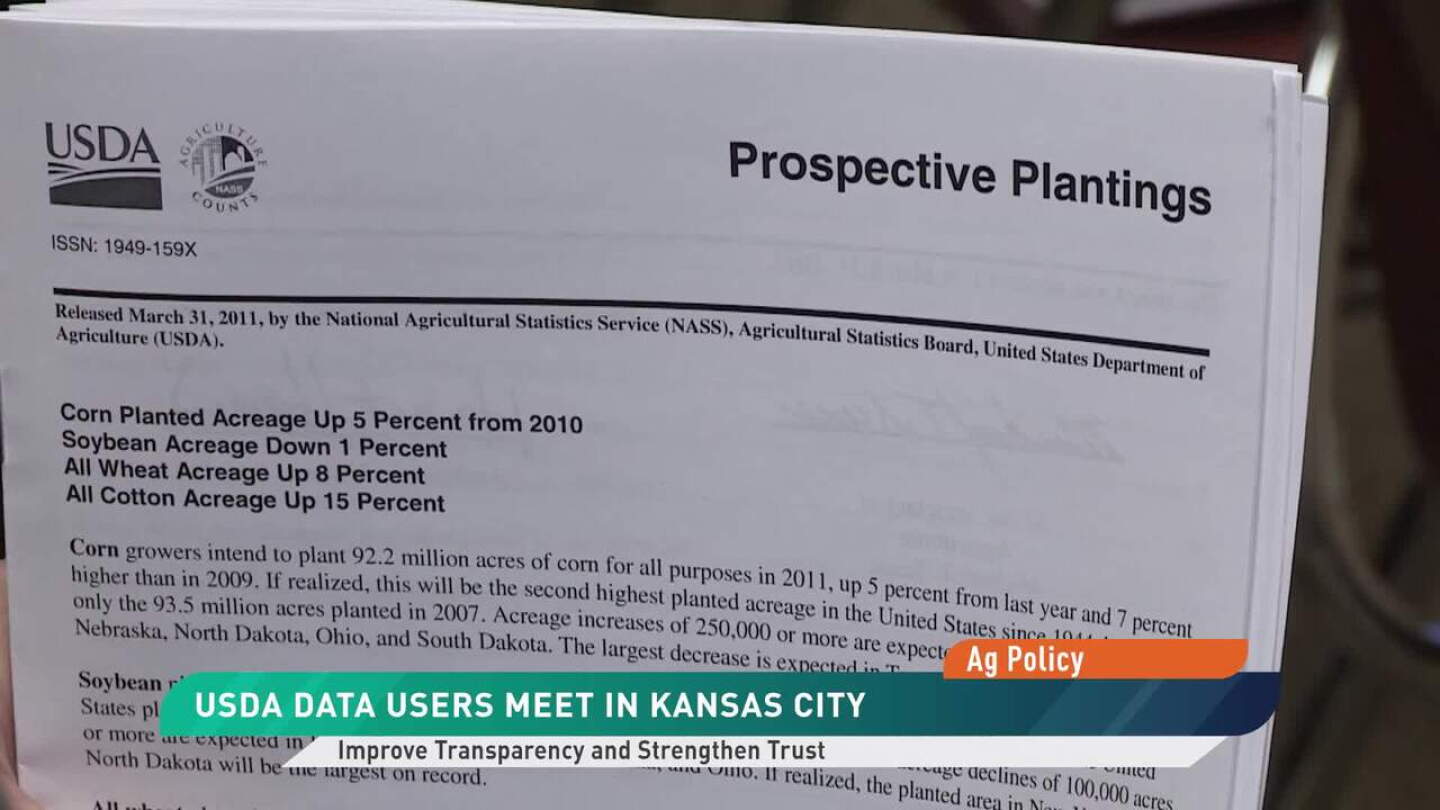
USDA put their quest for more data in action for June with the sample size balooning to more than 90k, up from 74k in March and 68k in June last year.

Source: USDA
NASS’s overall survey sample size grew more than 30% from last June, but response rates still fell to 39.8%, down from 43.6% a year ago and well off the 52% high from 2020.

Earlier today, a trader friend asked me why.
The answer is simple:
Many U.S. farmers do not look at USDA as their friend. If anything, there is a deep level of skepticism toward the agency, which makes producers guarded when the government starts asking questions.
Yes, farmers still report acres for crop insurance and FSA purposes. But that is required reporting.
NASS surveys are voluntary, and the broader FSA acreage data is not fully tabulated and released until after the growing season is well underway.
That leaves USDA trying to solve a trust problem with a bigger sample size.
Bigger sample. Same problem.
Today’s release also came with a special note.
Notes on acres left to plant at the time of surveying are not new. Last year, USDA noted that 3.63 million corn acres and 11.5 million soybean acres were still left to plant when producers were contacted.
This year, that number was smaller — 1.90 million corn acres and 8.05 million soybean acres.
But the more interesting part was the second paragraph.

Source: USDA
USDA went a step further and laid out the historical range around its own estimate.
Based on the past 20 years:
• Final corn acreage has a 90% chance of falling between 93.0 and 97.7 million acres
• Final soybean acreage has a 90% chance of falling between 82.8 and 87.9 million acres.
That does not mean USDA expects acreage to move that much.
It means NASS is trying to be more transparent about survey variability — and, in a year where response rates remain under pressure, reminding the market that June acreage is still a survey-based estimate, not the final word.
The bigger question is whether USDA can eventually connect the dots between what farmers are already required to report and what the market needs to know in real time.
FSA’s new “One Farmer, One File” pilot is a step in that direction — moving acreage reporting away from paper maps and toward a more streamlined electronic system.

While it does not solve the NASS response-rate problem today, it points to the obvious long-term fix: farmers are already reporting acres.
The challenge is making that data usable, timely, and trusted.
HOT Nugget: Final Thoughts
And lastly today,
I MADE THE WALL STREET JOURNAL.
I have been an avid WSJ reader for more than a decade and yesterday I was quoted in a story about the Trump administration’s latest move to prop up the farm economy.

I saw the story yesterday, but didn’t even get my paper out of the mailbox until this morning — when I realized it was not only in print, but only a couple pages in.

Straight from page A4:
“At some point, low prices have to cure low prices,” said Susan Stroud, an agriculture analyst and founder of No Bull Agriculture, a market research and consulting firm. “What we’re doing is ultimately encouraging more production.”
A couple people have told me I said the quiet part out loud.
Maybe I did.
Most farmers I know do not want government aid. But they are also not going to turn it down — especially when their competition is getting a check too.
That is the hard part. Aid is market-distorting. And government intervention has become a recurring theme in agriculture that, in the end, does not really fix the problem. If anything, it can encourage the same habits that helped create the problem in the first place.

Source: WSJ
I think back to the years I spent in a family poultry operation. Like we often see in hogs, the egg business is feast or famine.
The good times are great.
The bad times will bleed you dry.
When the kids’ dad and I first got into the egg business in a big way, it was 2008. Graded eggs were worth 30 cents a dozen. The box we put them in cost more than the eggs. Corn was $7.50 and was 60% of the ration.
You do the math.
Agriculture is unlike anything else on the planet. Sometimes you do everything right, produce the biggest crop on record and still end up bleeding.
That is the problem with productivity gains. When prices get low, agriculture’s natural instinct is to produce its way out of the profitability hole.
But when everyone does that, we end up right back where we are today.
For many U.S. farmers, the difficult reality is this: they raised a record crop, still have a pile of corn sitting in the bin (3 billion bushels as of June 1 to be exact), and as September creeps closer, those bushels will have to move before harvest begins.
Bins full of corn. Prices below the cost of production.
And another government check trying to soften the blow without fixing the underlying problem.
This week’s HOT TAKE is a day early instead of its usual day late, as has been the case lately.
Friday is a holiday (no markets), and No Bull will be on vacation for most of next week.
We will be back this Thursday, though, with a special 250 Years of American Agriculture update for all paid subscribers.
Thanks!

